Safe operation
Identify unsafe conditions before maintenance or restart.
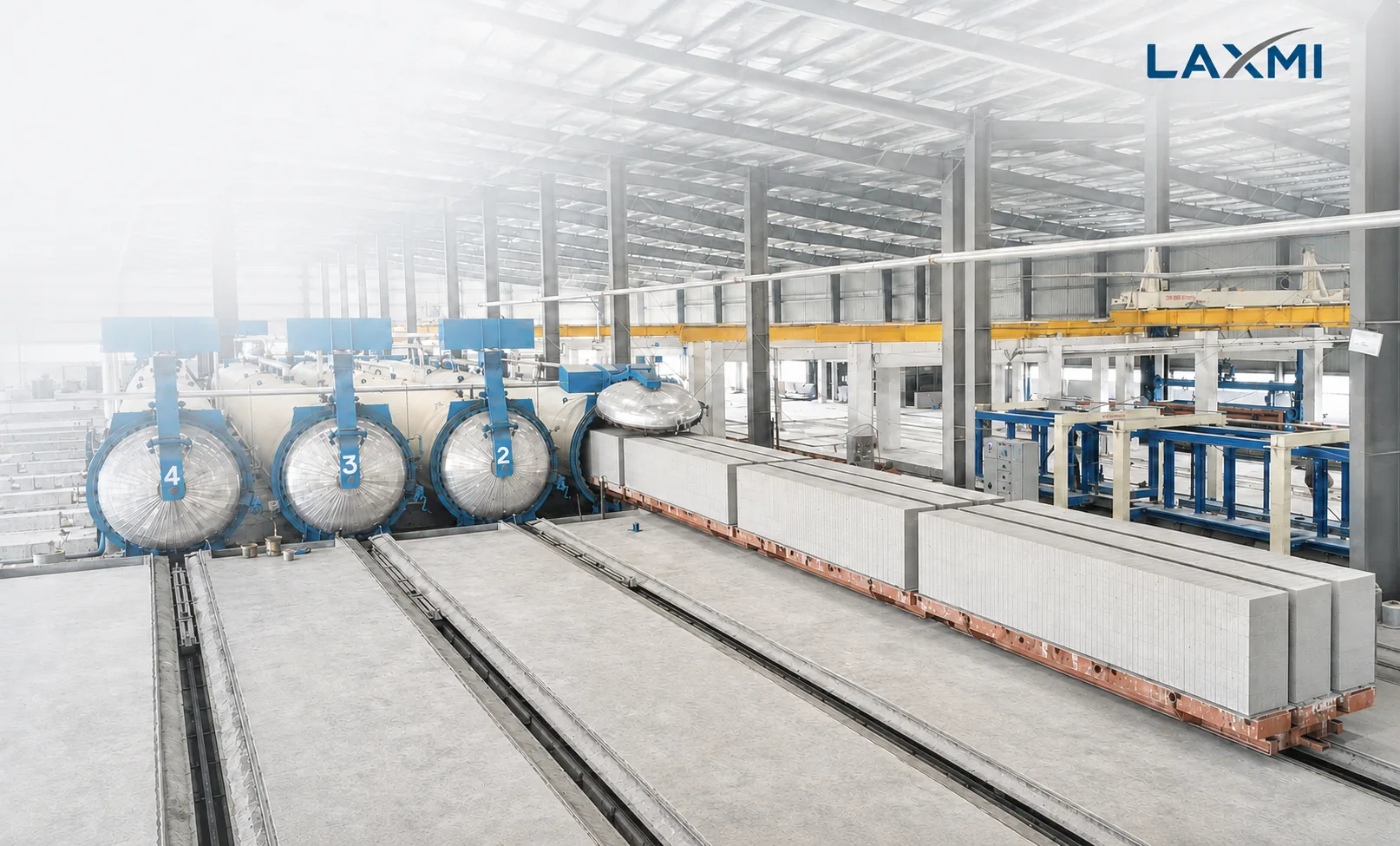
AAC plant operations · Technical guide
An AAC plant maintenance SOP defines what must be inspected, who is responsible and when an abnormal condition must be escalated. This framework connects equipment condition with safe operation, production stability and block quality.
General guidance only. Plant-specific OEM instructions and approved safety procedures take precedence.
01 · Understand
Because an AAC plant operates as one connected line, a fault in batching, mould handling, cutting, transfer, autoclaving or automation can affect downstream production.
Preventive maintenance helps teams detect developing faults, schedule interventions and connect machine condition with process and quality records.
Identify unsafe conditions before maintenance or restart.
Plan interventions instead of reacting during production.
Investigate equipment and process records together.
Record observations, owners, closure and follow-up.
02 · Evaluate
OEM guidance, operating hours, duty cycle, environment, equipment age, criticality, failure history and statutory requirements should shape the final schedule.
Guards, leakage, unusual noise, vibration, visible damage, lubrication condition and sensor status.
Bearing and gearbox behaviour, steam or hydraulic leakage, alignment, alarms and operating trends.
Approved cleaning, material removal, defect reporting and maintenance-log completion.
Alignment, calibration, motor testing, condition monitoring and statutory inspections as applicable.
Clear ownership
Pre-start observations, approved cleaning and abnormal-condition reporting
Drives, bearings, gearboxes, alignment, cranes and hydraulic systems
Motors, panels, sensors, PLC inputs, alarms and safety interlocks
Scheduling, shutdown approval, task closure and recurring-failure review
Machine-wise framework
Each row is an investigation scope—not a universal replacement interval. Final tasks, values and shutdown limits must be approved for the installed equipment.
Feeders, transfer points, drives, bearings, guards, material build-up and ball-mill systems where installed.
Agitator drives, pumps, seals, couplings, pipelines, valves and approved slurry-density measurement.
Load-cell mountings, weighing hoppers, flexible connections, mixer drives, discharge gates and sensors.
Mould bodies, side plates, locking arrangements, wheels, rails and pre-curing movement.
Wire condition, frame alignment, guides, bearings, movement mechanisms, sensors and safety interlocks.
Cranes, trolleys, rails, wheels, brakes, hooks, chains, hydraulics and position sensors.
Visible leakage, door and lock movement, seals, instruments, rails, trolleys and cycle irregularities.
Motors, VFDs, MCC panels, cables, sensors, alarms, PLC inputs and authorised isolation procedures.
Maintenance × quality
Maintenance observations are investigation areas, not automatic diagnoses. Raw materials, recipes and operating conditions must also be reviewed.
| Observed issue | Areas to investigate |
|---|---|
| Density or strength variation | Slurry measurement, batching accuracy, mixer condition and dosing consistency |
| Dimensional variation | Cutting-wire condition, frame alignment, movement accuracy and cake stability |
| Cake damage | Moulds, side plates, tilting, cranes, rails and transfer movement |
| Irregular cycles | Sensors, interlocks, drives, transfer equipment and control alarms |
03 · Decide
Reactive-only maintenanceWaiting for equipment to stop allows developing faults to remain unnoticed.
One frequency for every assetDuty cycle, environment, criticality and failure consequence differ across the line.
Replacing parts without finding causeRepeated failures can indicate misalignment, overload, contamination or installation problems.
Incomplete maintenance recordsA task marked only “done” cannot reveal equipment history or recurring patterns.
Planned shutdown
Practical questions
No. Equipment design, automation, mould size, duty cycle and operating conditions differ. A general framework must be converted into a plant-specific SOP.
Frequency should reflect OEM guidance, operating hours, equipment condition, failure history and statutory requirements—not only a generic calendar.
No. It can help identify avoidable failures, but unexpected faults can still occur. Critical-spares planning and controlled breakdown response remain necessary.
Routine observations may be completed by trained operators. Inspection, repair, testing and certification must follow approved procedures and applicable requirements.
Record the equipment identity, inspection date, observation or reading, defect severity, action, responsible person, status and required follow-up.
Engineering review
Share your plant configuration, affected equipment, recurring problem, photographs and recent maintenance records for an initial technical discussion.